 PawfullyHonest
Cat Diarrhea When to Worry: Red Flags, Timing, and Home Tracking
Cat diarrhea when to worry is when loose stool lasts more than 24 to 48 hours, contains blood or black tar, appears with vomiting, appetite loss, lethargy, dehydration, belly pain, or happens in a kitten, senior cat, or medically fragile cat. The safest owner move is to document stool pattern, hydration, food changes, and red flags, then call your veterinarian early instead of trying human anti-diarrhea medications at home.
Cat diarrhea when to worry depends on the whole pattern: stool texture, duration, appetite, hydration, vomiting, age, and whether your cat is acting normal between litter box visits. A single soft stool after a food change can be monitored briefly in a stable adult cat, but watery stool, bloody diarrhea in cats, mucus in cat stool, or diarrhea plus appetite loss should move you from guesswork to a veterinarian-guided plan. Cats often hide illness, so the best triage is specific, timed, and documented.
Related PawfullyHonest Cat Guides
- Cat Vomiting Guide for diarrhea plus vomiting, hairball confusion, and same-day warning signs.
- Cat Hydration Monitoring Checklist for water intake, gum feel, and litter-output tracking.
- Cat Food Transition Guide for avoiding digestive upset after formula changes.
- Sensitive Stomach Cat Food Checklist for diet trials after recurring soft stool.
- Cat Appetite Collapse Checklist when diarrhea overlaps with food refusal.
- Cat Pooping Outside the Litter Box if diarrhea is creating accidents or box avoidance.
Fast Triage: Monitor, Call, or Emergency?
The first decision is not "what caused the diarrhea?" It is "how risky is this cat right now?" Mild cat diarrhea acting normal can be monitored for a short window if the cat is an otherwise healthy adult, eating normally, drinking, bright, and producing only a small number of loose stools. The moment diarrhea becomes watery, repeated, bloody, black, paired with vomiting, or paired with poor appetite, the risk level changes.
Cornell Feline Health Center notes that diarrhea lasting more than a day or two, especially with systemic signs such as poor appetite, lethargy, or vomiting, should get veterinary care promptly. VCA Animal Hospitals similarly flags severe or bloody diarrhea with weakness, fever, vomiting, abdominal pain, dehydration, or appetite loss as potentially serious. Those patterns are not "wait and see" territory.
| Pattern | What you may see | Best next step |
|---|---|---|
| Brief monitor window | One soft stool, normal appetite, normal energy, no vomiting | Track stool and behavior closely; call if it repeats |
| Call your vet | Loose stool for 24 to 48 hours, mucus, mild appetite change, repeated box trips | Ask about stool sample, diet history, and visit timing |
| Same-day urgent care | Watery diarrhea, blood, black tarry stool, vomiting, lethargy, belly pain, dehydration | Call now; follow clinic instructions and prepare transport |
| Emergency threshold | Collapse, severe weakness, repeated vomiting, pale gums, extreme pain, kitten with profuse diarrhea | Seek emergency veterinary care immediately |
Do not let "acting normal" override the stool pattern if the stool is severe or persistent. Cats can look composed until dehydration, electrolyte shifts, or underlying disease has already progressed.
How Long Can Cat Diarrhea Last Before a Vet Visit?
For a stable adult cat, one isolated loose stool can sometimes be watched for the next litter box visit. If diarrhea continues into the next day, becomes watery, or repeats several times in a short period, it is time to call your veterinarian. By 24 to 48 hours, even a cat that seems otherwise normal deserves professional guidance because fluid loss can catch up quickly.
The timing should be shorter for cats with extra risk. Kittens have lower reserves and can dehydrate faster. Senior cats may have kidney disease, thyroid disease, cancer, inflammatory bowel disease, or medication effects layered into the same sign. Cats with diabetes, chronic kidney disease, heart disease, pregnancy, recent surgery, or appetite decline should not be triaged like healthy adults.
Use duration plus trend, not duration alone
A stool that improves from watery to soft over 12 hours while your cat eats and plays is different from stool that stays watery, smells unusually foul, or occurs every few hours. Trend is why a simple log matters. Write down the first abnormal stool time, how many stools occur, whether there is blood or mucus, and whether your cat is eating, drinking, hiding, vomiting, or visiting the box urgently.
If diarrhea started right after a new food, treat, antibiotic, dewormer, stressful trip, boarding stay, or household change, record that too. It does not prove the cause, but it gives your vet a faster way to decide whether to start with a diet adjustment, fecal testing, bloodwork, or a broader digestive workup.
What Stool Clues Matter Most?
The litter box can give useful clinical clues, but avoid diagnosing from appearance alone. Color, volume, mucus, blood, odor, urgency, and straining all help your veterinarian narrow the next step. A photo can be more useful than a long description, especially if the stool is unusual and you can take the picture without delaying care.
Stool signs that raise concern
- Watery stool that repeats or soaks into litter quickly.
- Fresh red blood, repeated blood streaks, or black tarry stool.
- Heavy mucus, jelly-like coating, or straining with small amounts.
- Very foul odor, pale stool, greasy stool, or stool that looks unlike your cat's normal pattern.
- Diarrhea paired with vomiting, appetite loss, weight loss, hiding, fever, or pain.
| Clue | Possible meaning | Why it matters |
|---|---|---|
| Fresh red blood or mucus | Colon irritation, parasites, infection, inflammation, diet intolerance | Often needs stool testing and vet-guided treatment |
| Black tarry stool | Possible digested blood from higher in the GI tract | More urgent, especially with weakness or vomiting |
| Large watery puddles | Small-intestinal diarrhea, fluid loss, infection, dietary trigger, systemic disease | Dehydration risk rises quickly |
| Small frequent urgent stools | Large-bowel irritation or colitis pattern | Can involve mucus, fresh blood, and straining |
| Normal stool plus liquid after | Mixed pattern or colon irritation | Log frequency and ask whether a sample is needed |
If your cat is straining repeatedly, do not assume it is diarrhea. Straining in the box can also look like constipation or urinary trouble. Male cats that strain and produce little or no urine need emergency evaluation for urinary blockage, which is a different and potentially life-threatening problem.
What Causes Sudden Cat Diarrhea?
Sudden diarrhea can come from a simple diet disruption or from a serious disease process. Common triggers include abrupt food change, rich treats, table scraps, stress, parasites, bacterial or viral infection, toxins, medication effects, inflammatory bowel disease, pancreatitis, thyroid disease, kidney disease, cancer, or foreign material ingestion. The same symptom can come from many places, so treatment should match the cause rather than just suppressing stool output.
Merck Veterinary Manual owner guidance emphasizes that a complete history, physical exam, stool testing, blood testing, imaging, and sometimes endoscopy may be needed to identify digestive disorders. That is why your diet timeline, medication list, and stool log are not busywork. They shape the diagnostic path.
Food-change diarrhea
Cat diarrhea after food change is common when a new formula, protein, treat, topper, or wet-food ratio is introduced too quickly. If the cat is bright and the stool is mild, your vet may ask about returning to a tolerated food or slowing the transition. Use the cat food transition guide to avoid repeated digestive shocks when changing formulas.
Stress and environment diarrhea
Boarding, travel, a new pet, litter box conflict, construction noise, or household routine change can upset some cats. Stress does not make every diarrhea episode harmless, but it is a useful context clue. If stool accidents are creating box avoidance, pair medical triage with the cat pooping outside the litter box guide so cleanup and box access do not become a second problem.
Parasites and infectious causes
Parasites are still possible in indoor cats, especially after adoption, shelter exposure, boarding, raw-food exposure, or contact with another animal's stool. A negative old fecal test does not rule out a new problem. Bring a fresh stool sample if your clinic requests one and avoid letting other pets share contaminated litter areas until your vet advises you.
What Should You Track Before Calling the Vet?
A structured log turns a vague symptom into useful clinical information. You do not need a complicated spreadsheet. You need enough detail for your veterinarian to see whether the problem is acute, improving, recurring, or linked to another body system.
Use a 10-point diarrhea log
| Field | What to write down |
|---|---|
| Start time | First abnormal stool date and time |
| Frequency | How many stools per day and whether trips are urgent |
| Texture | Soft, pudding-like, watery, mucus-coated, greasy, mixed |
| Color | Brown, yellow, black, red streaks, pale, unusual |
| Output | Large puddles, small frequent amounts, accidents, normal stool plus liquid |
| Other symptoms | Vomiting, appetite change, lethargy, hiding, pain, fever, weight loss |
| Hydration clues | Water intake, gum moisture, urine clump size, weakness |
| Diet changes | Food, treats, toppers, supplements, table scraps, raw food, new water source |
| Medication history | Antibiotics, dewormers, pain meds, steroids, preventives, missed doses |
| Exposure history | New pet, boarding, travel, plants, trash, string, outdoor access, sick animals |
Photos are useful when stool has blood, mucus, unusual color, or mixed texture. A stool sample may be even more useful. Ask your clinic how fresh it should be, what container to use, and whether litter contamination matters for the test they plan to run. Do not delay an emergency visit just to collect a perfect sample.
Track appetite with particular care. Cats that stop eating can develop secondary problems, and diarrhea plus appetite collapse is more concerning than stool change alone. Use the cat appetite collapse checklist if food intake drops, meals are skipped, or your cat starts hiding near feeding time.
What Can You Do at Home Safely?
Home care should be conservative and should never replace veterinary care when red flags are present. The safe basics are observation, hydration support, low-stress access to the litter box, and accurate history. Keep fresh water available, keep meals predictable, and avoid piling on new foods, supplements, or medications while the gut is already unstable.
What not to do
- Do not give human anti-diarrhea medicines unless your veterinarian specifically instructs you.
- Do not fast your cat unless your veterinarian tells you to; prolonged food refusal can be dangerous for cats.
- Do not switch through multiple foods in one weekend to "find the fix."
- Do not assume probiotics, pumpkin, or fiber are safe for every cat with diarrhea.
- Do not ignore vomiting, weakness, dehydration, blood, black stool, or appetite loss.
PetMD veterinary-reviewed guidance specifically warns owners not to use human products such as Pepto-Bismol or Kaopectate for cat diarrhea, and similar caution applies to other over-the-counter medications unless your veterinarian has directed use. The reason is practical: some products can be harmful, and symptom-suppression can hide a problem that needs a different treatment.
If the diarrhea is mild and your cat is stable, your veterinarian may suggest a diet strategy, probiotic, fecal testing, or monitoring period based on your cat's history. Follow that plan instead of mixing advice from forums, labels, and human medicine. For cats with repeat soft stool after diet changes, use our sensitive stomach cat food checklist to organize elimination-trial details before your next appointment.
Which Cats Need Faster Triage?
Some cats should not wait through a long monitoring window. Kitten diarrhea emergency risk is higher because young cats can lose fluid quickly and may have parasites, viral disease, dietary intolerance, or infection. Senior cat diarrhea is also higher risk because older cats are more likely to have kidney disease, thyroid disease, cancer, inflammatory bowel disease, dental disease, medication effects, or reduced reserve.
| Higher-risk cat | Why the threshold is lower | Practical action |
|---|---|---|
| Kitten | Lower fluid reserve and higher infectious/parasitic risk | Call promptly, especially if watery, frequent, or paired with poor appetite |
| Senior cat | More chronic disease overlap and dehydration vulnerability | Do not wait several days; ask about same-day or next-day evaluation |
| Cat with kidney disease | Fluid loss can destabilize hydration and appetite | Use your vet's existing care plan and call early |
| Cat with diabetes | Appetite and hydration changes can affect glucose management | Ask for diabetes-specific instructions |
| Recently medicated cat | Antibiotics, pain meds, or preventives may change GI function | Report medication name, dose timing, and symptom timing |
Hydration monitoring belongs in every high-risk plan. Dry or tacky gums, sunken-looking eyes, weakness, reduced urine output, poor appetite, or a cat that seems dull should move the situation up the urgency ladder. Use the cat hydration monitoring checklist for baseline observations, but call your clinic if signs are abnormal.
How Do Vets Diagnose Cat Diarrhea?
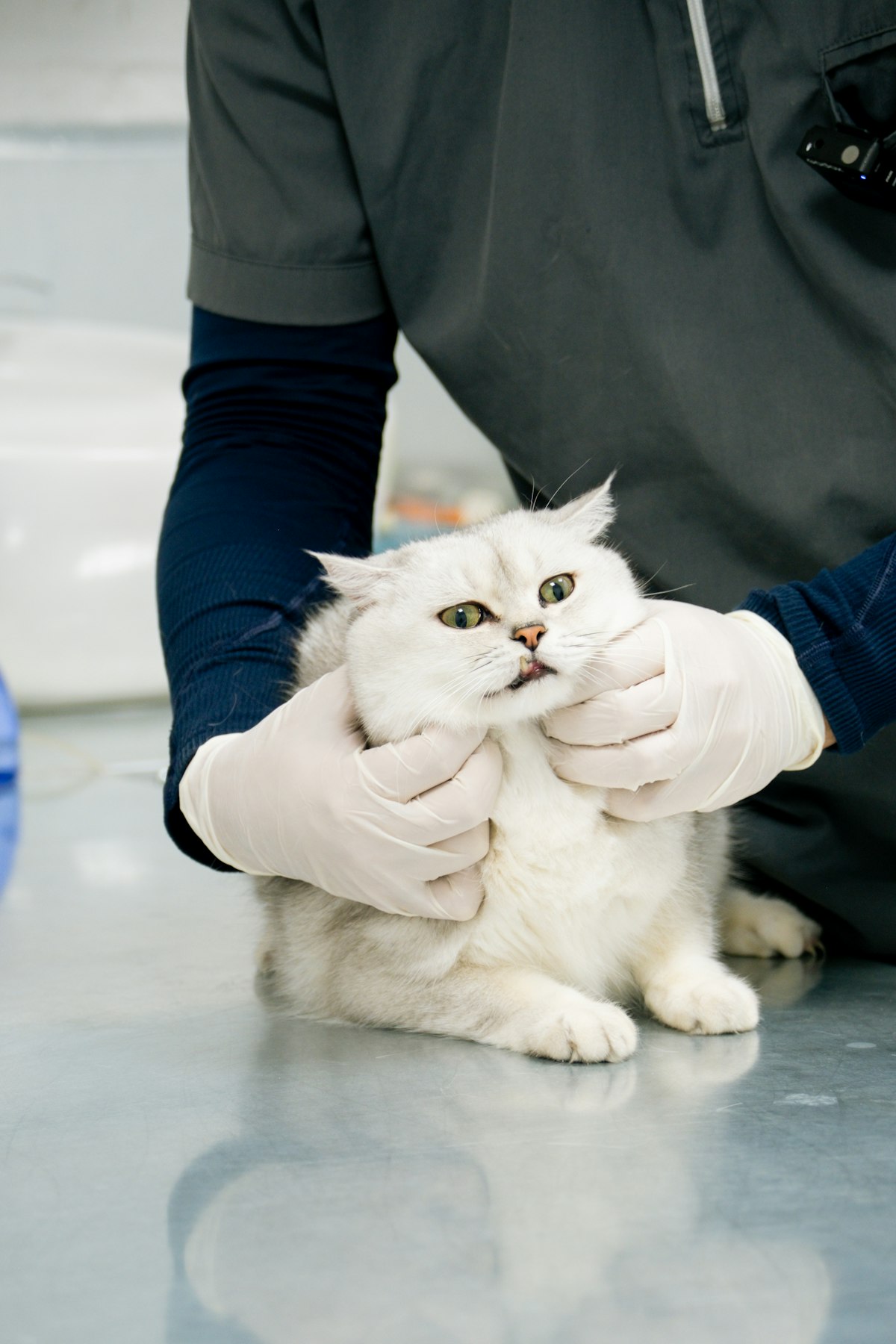
Your veterinarian's first job is to assess stability: hydration, pain, temperature, weight trend, appetite, gum color, and whether vomiting or systemic illness is present. Mild cases may start with a focused exam and fecal testing. More concerning cases may need bloodwork, urinalysis, imaging, infectious-disease screening, or referral diagnostics depending on the pattern.
Common diagnostic steps
- Review stool timeline, diet, medication, exposure, and household history.
- Perform a physical exam, weight check, hydration check, and abdominal assessment.
- Run fecal testing for parasites, infectious organisms, or inflammatory clues when indicated.
- Use bloodwork and urine testing to evaluate dehydration, anemia, kidney values, thyroid disease, diabetes, liver changes, and systemic illness.
- Use imaging or advanced testing when foreign material, cancer, inflammatory bowel disease, pancreatitis, or chronic disease is suspected.
VCA notes that diagnostic options can include blood work, stool and rectal swab samples, DNA testing, bacterial culture, X-rays, ultrasound, and endoscopic exam when initial evaluation does not fully explain the problem. That does not mean every cat needs every test. It means persistent, severe, or recurring diarrhea deserves a cause-focused plan instead of repeated guesswork.
If your cat also vomits, pair this article with the cat vomiting guide. Diarrhea and vomiting together change hydration risk and often shorten the timeline for veterinary attention.
Prevention Plan for Repeat Diarrhea
Not every diarrhea episode is preventable, but repeat episodes usually benefit from a tighter household system. The goal is to reduce avoidable triggers and make unavoidable problems easier to diagnose. A predictable diet, clean litter setup, lower-stress transitions, and organized medical history all help.
Build a lower-risk routine
- Transition foods over 7 to 14 days unless your veterinarian gives a different plan.
- Limit treat experiments and introduce one new item at a time.
- Keep litter boxes clean enough to spot stool changes quickly.
- Use routine parasite prevention and testing guidance from your veterinarian.
- Store food in sealed containers and discard spoiled wet food promptly.
- Keep plants, string, rubber bands, human medications, trash, and unsafe foods out of reach.
- Track senior-cat weight, appetite, hydration, and stool quality weekly.
For cats with recurring soft stool, a veterinarian-guided diet trial may be more useful than rotating brands repeatedly. Use one variable at a time: protein, formula, treat load, fiber strategy, or medication. If multiple changes happen at once, you lose the ability to tell what helped.
Good diarrhea triage is not about panic; it is about noticing the point where stool changes become a whole-cat health problem.
The final prevention habit is record continuity. Keep your cat's normal stool pattern, food, medication list, and weight trend in one note. When something changes, update the note with dates. That simple record can turn a stressful call into a clear clinical handoff.
Frequently Asked Questions
When should I worry about cat diarrhea?
Worry when diarrhea lasts more than 24 to 48 hours, becomes watery, contains blood or black tar, appears with vomiting, appetite loss, lethargy, dehydration, belly pain, or affects a kitten, senior cat, pregnant cat, or chronically ill cat. Those patterns deserve veterinary guidance sooner rather than later.
How long can cat diarrhea last before a vet visit?
A single loose stool in a stable adult cat can be monitored briefly, but persistent diarrhea beyond one to two days should be discussed with your veterinarian. If symptoms worsen, include blood, or overlap with poor appetite or vomiting, call the same day.
Is cat diarrhea an emergency if my cat is acting normal?
Not always, but acting normal does not make repeated diarrhea harmless. Track frequency, texture, appetite, water intake, and energy; call your vet if diarrhea persists, becomes watery, contains blood or mucus, or your cat becomes less bright.
What does blood or mucus in cat diarrhea mean?
Blood or mucus can come from colon irritation, parasites, infection, diet intolerance, inflammation, or other intestinal disease. Repeated blood, black stool, weakness, vomiting, poor appetite, or pain should be treated as urgent.
Can I give my cat Imodium or Pepto-Bismol for diarrhea?
Do not give human anti-diarrhea medications unless your veterinarian specifically tells you to. Some products can be dangerous for cats, and delaying cause-focused care can make a serious problem harder to treat.