 PawfullyHonest
Dog Heat Stroke Symptoms: First Aid, Red Flags, and Vet Timing
Dog heat stroke symptoms are emergency warning signs that your dog is losing the ability to cool down and may be developing organ-threatening hyperthermia. The safest response is to move your dog out of heat, start active cooling with cool water and airflow, and contact an emergency veterinarian while you prepare transport.
Dog heat stroke symptoms can move from heavy panting to collapse faster than many owners expect, especially during humid walks, car delays, yard play, or hot-weather travel. Heatstroke in dogs is not just "being hot"; it is a medical emergency where panting can no longer keep body temperature controlled. The useful question is not whether your dog is uncomfortable. It is whether the signs are trending toward heat injury and whether you are cooling early enough.
Related PawfullyHonest Dog Safety Guides
- Dog Dehydration Signs for hydration checks that often overlap with heat stress.
- Pet Car Travel Checklist for safer vehicle planning during warm weather.
- Pet Emergency Kit Checklist for records and supplies to keep ready before summer travel.
- Dog Pain Signs Checklist for subtle distress cues after a stressful heat event.
- Dog Honking Cough vs Reverse Sneezing if heat exposure overlaps with abnormal breathing sounds.
Fast Triage: Is This Heat Stress or Heat Stroke?
Heat stress, heat exhaustion, and heat stroke sit on the same danger ladder. A mildly hot dog may pant, seek shade, drink, and recover quickly once activity stops. A dog moving toward heat stroke keeps panting hard, looks mentally off, drools thickly, stumbles, vomits, collapses, or cannot cool even after shade and water are available.
Do not wait for a thermometer to confirm the problem. Rectal temperature is useful if you can take it safely, but treatment decisions should be driven by the whole pattern: heat exposure plus abnormal breathing, neurologic changes, gut signs, weakness, or poor recovery. Cornell University College of Veterinary Medicine describes heatstroke as a life-threatening emergency tied to hot or humid exposure, strenuous exercise, and hot-car confinement.
| Pattern | What you may see | Immediate response |
|---|---|---|
| Heat stress | Panting, thirst, seeking shade, still responsive | Stop activity, move indoors, offer water, monitor closely |
| Heat exhaustion symptoms | Heavy panting, weakness, slower responses, thick drool | Begin cooling and call your vet or emergency clinic |
| Heat stroke symptoms | Collapse, confusion, vomiting, bloody diarrhea, seizure, blue or very red gums | Cool now and go to emergency veterinary care |
The practical rule is simple: if your dog looks abnormal after heat exposure and does not improve within minutes of cooling, treat it as urgent. Heat injury can keep damaging organs even when panting begins to look less dramatic.
What Are the First Signs of Heat Stroke in Dogs?
The first signs are often easy to dismiss because they look like an exaggerated version of normal panting. Watch the trend rather than one isolated sign. A dog that pants after fetch and then recovers in the shade is different from a dog that pants harder, drools more, and seems less coordinated after the activity stops.
Early signs that deserve immediate cooling
- Heavy panting or rapid breathing that does not settle quickly.
- Thick drool, dry or tacky gums, or repeated lip licking.
- Bright red gums or tongue, especially with a hot body surface.
- Weakness, lagging behind, refusing to continue, or seeking shade urgently.
- Restlessness, glassy eyes, confusion, or poor response to familiar cues.
These signs overlap with dog dehydration signs, but heatstroke is more time-sensitive because body temperature and inflammation can rise quickly. If dehydration is the only issue, water and rest may help. If heat injury is developing, water alone is not enough.
Severe signs that mean emergency care
Severe overheated dog symptoms include vomiting, diarrhea, blood in vomit or stool, wobbliness, collapse, seizure, pale or blue-gray gums, extreme lethargy, or breathing distress at rest. The American Red Cross lists shock and heatstroke signs such as collapse, body temperature at or above 104°F, bloody vomiting or diarrhea, seizures, excessive panting, breathing difficulty, increased heart rate, and heavy salivation.
Once severe signs appear, the job at home is not to finish treatment. It is to reduce heat load enough to improve the odds during transport and then let the veterinary team manage fluids, electrolytes, organ monitoring, and shock risk.
When Are Dog Heat Stroke Symptoms an Emergency?
Heatstroke is an emergency when heat exposure is followed by neurologic signs, gut signs, shock signs, or breathing distress. Do not downgrade the event because your dog is young, athletic, or usually tolerates warm walks. Exertion, humidity, dark coats, poor airflow, and underlying airway disease can turn an ordinary routine into a dangerous episode.
| Red flag | Why it matters | Action |
|---|---|---|
| Collapse or inability to stand | Possible shock, neurologic injury, or severe hyperthermia | Cool immediately and go to ER |
| Seizure, disorientation, or stupor | Central nervous system involvement | Emergency transport during cooling |
| Vomiting, diarrhea, or blood | Gut injury and dehydration can accelerate | Urgent veterinary care |
| Blue, gray, pale, or brick-red gums | Oxygenation and circulation may be compromised | Emergency care now |
| Breathing distress at rest | Airway or lung compromise may be present | Do not delay transport |
If you are unsure, call the nearest emergency veterinary hospital while you begin cooling. Give a short, useful history: outside temperature, humidity if known, length of exposure, activity level, signs seen, current gum color, whether vomiting or collapse occurred, and your estimated arrival time. Clear information helps the clinic prepare before you reach the door.
What Should You Do in the First 10 Minutes?
The first 10 minutes should be calm, physical, and direct. Move the dog to shade, air conditioning, or a breezy indoor area. Start active cooling. Call the emergency vet. Begin transport as soon as you have basic cooling underway and a safe route.
Step 1: Stop heat exposure
End the walk, game, car wait, or yard time immediately. Carry small dogs if they are weak. For large dogs, use a towel as a sling if needed and avoid forcing them to walk farther. Get them off hot pavement or direct sun.
Step 2: Cool the body surface
Use cool water, not hot water. Wet the body, especially the underside, chest, belly, neck, and paws. Add airflow with a fan, open car vents, or moving air. Keep cooling during the call and while getting ready to leave. If your dog is conscious and able to swallow normally, offer small amounts of water, but do not force water into the mouth.
Step 3: Call and go
Veterinary care is still needed even if your dog perks up. Heatstroke can injure the kidneys, gut, brain, liver, clotting system, and heart after the visible crisis begins to fade. If your dog had collapse, confusion, vomiting, diarrhea, seizure, or abnormal gums, go to emergency care without waiting for a routine appointment.
| Do | Why |
|---|---|
| Move to shade or air conditioning | Stops ongoing heat gain |
| Use cool water plus airflow | Improves heat loss through evaporation and convection |
| Call the ER clinic before arrival | Lets the team prepare fluids and monitoring |
| Bring medication and medical history | Speeds treatment decisions for high-risk dogs |
Keep a small summer travel kit in the car: collapsible bowl, clean water, towel, leash, vaccination and medication notes, and the address of the closest emergency hospital. The same planning fits naturally with a broader pet emergency kit checklist.
Which Cooling Mistakes Make Things Worse?
Owners often hear conflicting advice during a heat emergency. The most dangerous mistake is delay: waiting for symptoms to "sleep off," driving without any cooling when cooling supplies are available, or assuming a dog is safe because panting briefly improves.
Common mistakes to avoid
- Do not force water into a weak, vomiting, or mentally dull dog.
- Do not use human fever reducers or pain medications unless your veterinarian specifically instructs you.
- Do not wrap your dog tightly in wet towels and leave them there without airflow; trapped heat can work against cooling.
- Do not delay emergency care because the gums or panting look better after a few minutes.
- Do not put an unstable dog back on hot pavement to "walk it off."
If you have a thermometer and can safely take a rectal temperature, report the number to the emergency clinic. If you cannot, keep moving. A thermometer is helpful, but it is not worth a bite risk, a handling struggle, or a transport delay.
What Causes Heatstroke in Dogs?
Heatstroke happens when heat gain exceeds the dog's ability to shed heat. Dogs rely heavily on panting, limited paw-pad sweating, shade seeking, and blood-flow changes near the skin. Humidity weakens panting because evaporation slows. Poor airflow weakens cooling. Exercise adds internal heat. A car, kennel, crate, patio, or yard can trap heat even when shade seems nearby.
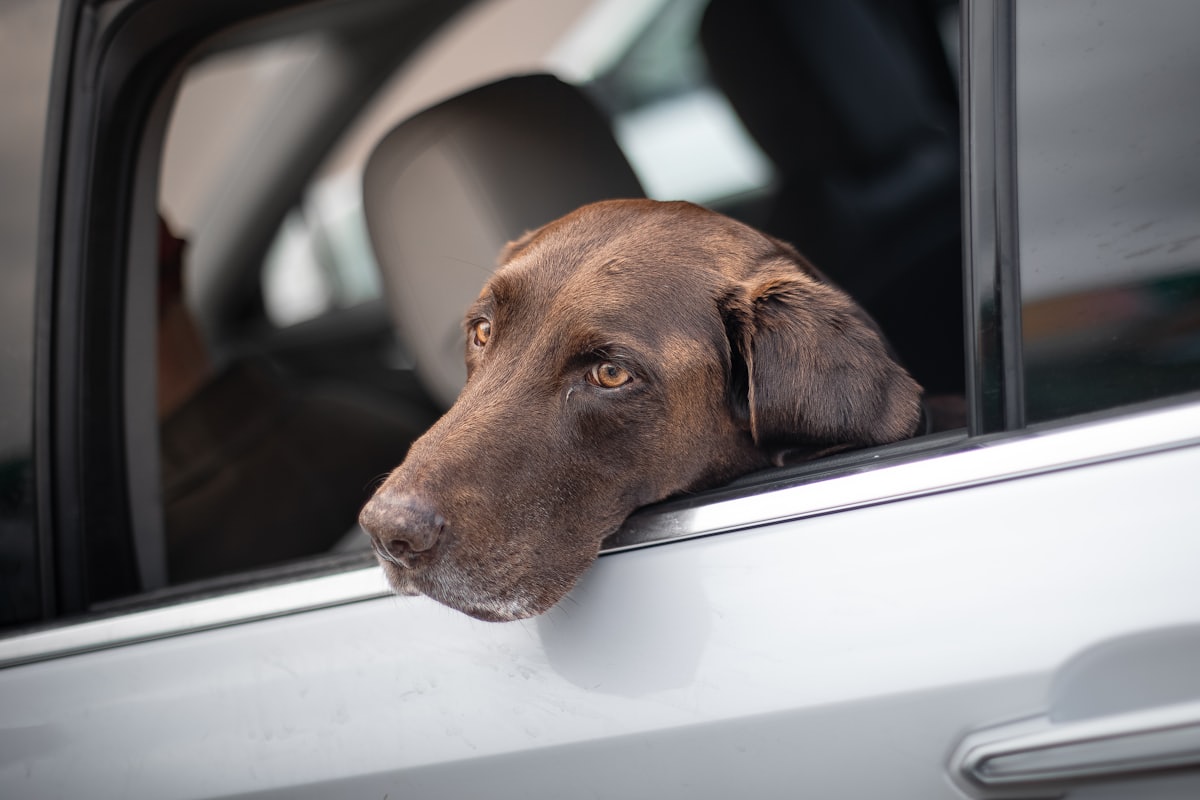
The American Veterinary Medical Association hot-car safety flyer warns that a vehicle can rise almost 30°F within 20 minutes. That matters because "just a quick stop" can become a life-threatening hot car dog heatstroke scenario before an owner returns.
Common trigger scenarios
- Midday walks on humid days with limited shade.
- Fetch, running, hiking, or dog sports in heat the dog has not acclimated to.
- Waiting in a vehicle, even with cracked windows.
- Outdoor confinement without airflow, shade, and fresh water.
- Grooming, boarding, travel, or event days where stress and heat stack together.
For travel days, pair heat planning with the pet car travel checklist. The safest vehicle strategy is not a cracked window. It is avoiding unattended car time entirely, planning cooling stops, and keeping water and emergency contacts within reach.
Which Dogs Are Highest Risk?
Any dog can develop heatstroke, but risk is uneven. Short-nosed breeds, seniors, puppies, overweight dogs, thick-coated dogs, dogs with heart or airway disease, and dogs recovering from illness or surgery have less margin. A temperature that is workable for one lean, acclimated dog may be unsafe for another dog on the same block.
| Risk factor | Why heat risk rises | Practical adjustment |
|---|---|---|
| Flat-faced breeds | Airway anatomy makes panting less efficient | Skip heat exercise and use indoor enrichment |
| Senior dogs | Lower reserve and more chronic disease overlap | Shorter routes, more rest, lower heat threshold |
| Overweight dogs | Extra insulation and higher workload | Use weight-safe activity and early walks |
| Dark or thick coats | More heat absorption and slower cooling | Prioritize shade, brushing, and water breaks |
| Heart, lung, or laryngeal disease | Cooling and oxygenation are already strained | Ask your vet for a written heat plan |
Health history also changes how you interpret symptoms. A dog with airway disease, heart disease, kidney disease, or recent GI illness should get a lower threshold for veterinary guidance. If pain, stiffness, or weakness appears after a heat event, use the dog pain signs checklist to track recovery, but do not let a checklist replace urgent care if heatstroke red flags appeared.
How Hot Is Too Hot to Walk a Dog?
There is no single universal temperature that protects every dog. Air temperature, humidity, sun exposure, pavement heat, route length, dog fitness, breed anatomy, coat, age, and acclimation all matter. The more risk factors your dog has, the more conservative your walking plan should be.
Use a route decision, not a number alone
Before leaving, ask four questions: Can my dog cool efficiently? Is there shade for most of the route? Is the pavement comfortable to touch? Can we stop and return home quickly if panting changes? If any answer is weak, shorten the walk or replace it with indoor training, scent games, or a shaded potty-only trip.
| Condition | Safer adjustment |
|---|---|
| High humidity | Shorten the route because panting evaporates less effectively |
| Hot pavement | Use grass, booties only if trained, or delay the walk |
| No shade | Choose a different route or move to early morning |
| Dog starts lagging | Stop immediately and cool instead of pushing home fast |
| Flat-faced or senior dog | Use potty breaks and indoor enrichment on hot days |
Watch your dog, not just your weather app. A dog that suddenly slows, pants with a wide spatulate tongue, seeks shade, resists continuing, or looks unfocused is telling you the walk has already crossed a line.
What Happens at the Vet After Heat Stroke?
Veterinary care focuses on controlled cooling, IV fluids, shock management, oxygen support if needed, bloodwork, electrolytes, glucose, kidney values, clotting concerns, and monitoring for delayed complications. Your dog may look better after initial cooling and still need hospital observation because heatstroke is a whole-body event.
Bring the timeline. The vet needs to know when exposure started, when signs appeared, whether your dog collapsed or seized, whether vomiting or diarrhea occurred, what cooling you used, and any medications or chronic conditions. If your dog has insurance, records also matter later; the pet insurance claim process guide can help organize invoices and medical notes after urgent care.
Recovery is a monitoring period
Dog heat stroke recovery depends on severity and speed of treatment. Mild heat stress may resolve with cooling and observation. True heatstroke can require hospitalization, repeat lab checks, GI support, clotting monitoring, and rest after discharge. Follow your discharge instructions precisely, including exercise restriction and recheck testing.
After a heat event, reduce exercise for several days unless your veterinarian gives different instructions. Track appetite, stool, urine output, breathing, energy, gum color, and behavior. If vomiting, diarrhea, weakness, dark urine, confusion, or breathing changes appear after discharge, call the clinic immediately.
Prevention Plan for Summer Heat Safety
The best heatstroke plan is boring and repeatable. Build a heat rule for your household before the first extreme day of summer: who checks weather and humidity, which routes are shade-safe, what time walks move earlier, when dog parks are skipped, and where the emergency clinic is located.
Daily heat safety routine
- Walk before the day heats up and avoid intense midday activity.
- Carry water on warm routes, even for short outings.
- Use harnesses and shade breaks for dogs with airway strain.
- Never leave a dog unattended in a vehicle.
- Replace fetch or running with scent games when humidity is high.
- Keep emergency clinic contacts saved in your phone.
Prevention should also account for training and behavior. A high-drive dog may not self-limit during fetch. A separation-anxious dog may panic in a crate if airflow fails. A travel-stressed dog may pant from both heat and anxiety. Your plan should fit the dog in front of you, not an average dog in a generic chart.
Finally, share the plan with dog walkers, sitters, family members, groomers, and boarding providers. Most heat mistakes happen during handoffs, errands, or routine activities that feel harmless. Clear rules prevent those gaps.
Frequently Asked Questions
What are the first signs of heat stroke in dogs?
The first signs are usually heavy panting, rapid breathing, bright red gums, thick drool, weakness, stumbling, and poor recovery after moving to shade. If those signs appear after heat exposure, begin cooling immediately and call a veterinarian.
What should I do if my dog has heat stroke symptoms?
Move your dog out of heat, wet the body with cool water, add airflow, call the nearest emergency veterinary hospital, and prepare transport. Offer small amounts of water only if your dog is alert and swallowing normally.
Should you cool a dog before going to the vet?
Yes. Start cooling immediately while you arrange transport. Cooling first can reduce heat load, but it does not replace emergency veterinary care because internal injury can continue after symptoms seem improved.
Can dogs recover from heat stroke?
Dogs can recover when treatment is fast, but severe cases can damage the kidneys, gut, brain, clotting system, heart, and liver. Recovery should be monitored by a veterinarian, especially after collapse, vomiting, diarrhea, seizures, or abnormal gums.
How hot is too hot to walk a dog?
There is no single safe cutoff for every dog. Humidity, pavement heat, shade, breed, age, weight, coat, and health history change risk, so shorten or skip walks whenever your dog cannot cool comfortably or starts showing abnormal panting.